
Pressure Vessels Periodic Inspection Services
Pressurised storage systems require regular maintenance and periodic inspection to support safe use, regulatory compliance and the prevention of potential hazards.
Inspection Coverage
- Booster and expansion vessels
- Calorifiers and hot-water storage tanks
- Compressed-air receivers and compressor systems
- LPG and liquefied gas tanks
- Cryogenic tanks, autoclaves and process vessels
Pressure Vessels
Pressure vessels are storage systems operating under pressure. Turkish legislation contains two regulations relating to pressure vessels. Based broadly on the Simple Pressure Vessels Regulation, they are described as tanks operating at pressures of 0.5 bar or above. They are used to store larger quantities of material in a smaller space, achieve the required pressure and fulfil similar purposes.
Pressure vessels are useful storage systems but also present hazards. Regular maintenance and periodic inspections help eliminate those hazards. They are classified according to characteristics such as their contents, operating temperature and shape.
Examples include hot-water storage tanks, calorifiers, booster and expansion vessels, air receivers, cryogenic storage tanks, and underground and above-ground LPG tanks.
Legislation and the Approach to Periodic Inspection
Periodic inspections were first addressed in the Occupational Safety Regulation published in 1973. They were subsequently covered in greater detail by Occupational Health and Safety Law No. 6331, published on 20 June 2012, and the associated Regulation on Health and Safety Requirements for the Use of Work Equipment, published on 25 April 2013. The framework addressed matters not previously covered and introduced a broader perspective on periodic inspection. The regulation established a more professional approach, and progress in this field has continued.
Significant changes were introduced by the Regulation Amending the Regulation on Health and Safety Requirements for the Use of Work Equipment, published on 18 February 2022. These changes include:
- Following major maintenance or repair, and during third-year inspections, pressure vessels must undergo a hydrostatic test at 1.5 times their maximum working pressure or at the pressure stated on their nameplate. Where the relevant standard specifies otherwise, that standard must be followed. During first- and second-year inspections, hydrostatic testing must be carried out at the equipment's operating pressure.
- The justification for any non-destructive examination must be included with the periodic inspection report. The person performing the examination must hold Level 2 certification to TS EN ISO 9712. The selected method must be one offered as an alternative to hydrostatic testing in the pressure vessel's periodic inspection or manufacturing standard.
- Periodic inspections of pressure vessels take account of the standard applicable in the year of manufacture. If the equipment can be brought into conformity with the current standard, that standard should be used. If no standard existed in the year of manufacture, the first published standard should be applied.
Pressure Vessel Types and Inspection Details
Booster and Expansion Vessels
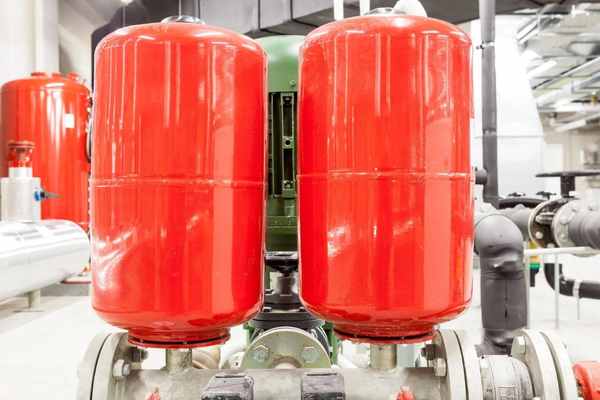
FQC Standard Periodic Inspection of Pressure Vessels, Booster Vessels and Expansion Vessels
Booster and expansion vessels are pressure vessels with a wide range of applications. They balance system pressure, minimise pump switching to extend pump life, and reduce energy consumption. Also known as buffer vessels, they stabilise liquid pressure through an air cushion. They are classified as diaphragm or compressor-supported vessels according to the cushioning arrangement. In compressor-supported systems, the compressor supplies the air pressure. In diaphragm vessels, a membrane separates the air from the water.
Buffer vessels can be used in central heating boiler systems, where the arrangement is known as a closed expansion system. They are also used to balance pressure in booster systems, in which case they are referred to as booster vessels.
Expansion vessels must undergo periodic inspection at least once a year with reference to TS 10576, TS 1911, TS 11490, TS 13831 and TS EN 764-7.
Calorifiers and Hot-Water Storage Tanks
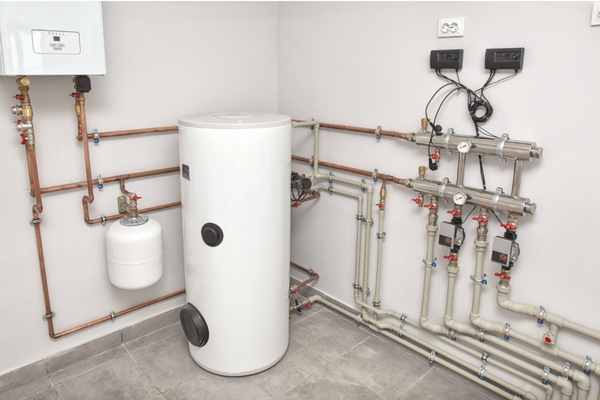
FQC Standard Periodic Inspection of Calorifiers and Hot-Water Storage Tanks
These tanks store hot water under pressure. Water circulating continuously in closed heating, solar thermal or air-conditioning circuits is not suitable for domestic use. The tanks allow heat to be transferred from this circulating water to clean service water without mixing the two.
Calorifiers and hot-water storage tanks differ in their construction. Storage tanks do not contain an internal heating coil.
For a storage tank, heat transfer takes place through an external heat exchanger, so only clean water is held inside the tank. A calorifier transfers heat through an internal coil.
The choice between the two tank types depends on factors such as the available installation space and required water capacity.
Periodic inspections of calorifiers and hot-water storage tanks are mandatory. Storage tanks undergo a hydrostatic test.
Calorifiers have two separate spaces operating at different pressures and therefore require two hydrostatic tests: one for the tank and another for the coil system.
Calorifiers and hot-water storage tanks must undergo periodic inspection at least once a year with reference to TS 736 and TS EN 12897+A1.
Compressed-Air Receivers and Compressor Systems
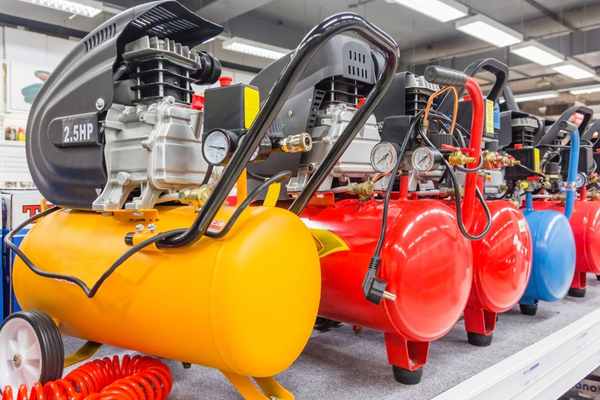
FQC Standard Periodic Inspection of Compressed-Air Receivers and Compressor Systems
Compressed-air receivers store air or nitrogen under pressure. They balance pressure from the supply source, reduce compressor start-stop cycles and energy consumption, and support the system during pressure losses caused by power cuts or supply failures. They also provide time to stop or adjust a production line when pressure falls.
Periodic inspection of compressed-air receivers is a legal requirement. As with other pressure vessels, hydrostatic testing must be performed at least once a year to help prevent hazards such as rupture or failed connections.
Connections must be suitable for the operating pressure. Periodic inspections must test the vessel body, connections, pressure-control systems and safety valve.
Compressed-air receivers must undergo periodic inspection at least once a year with reference to TS 1203 EN 286-1, TS EN 13445-5 and TS EN 764-7.
Underground and Above-Ground Liquefied Gas Tanks
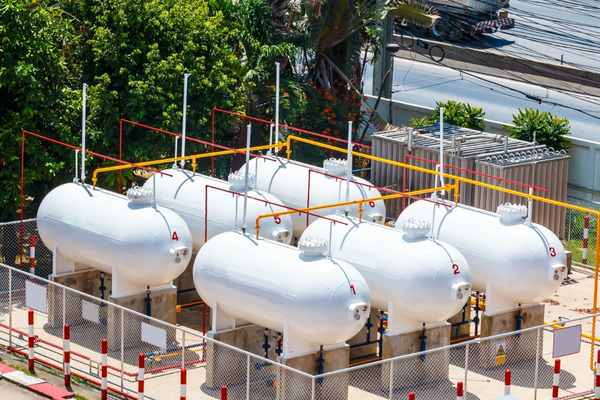
FQC Standard Periodic Inspection of Underground and Above-Ground Liquefied Gas Tanks
These tanks are installed underground or above ground to store gases in liquid form. They generally have a single wall and are sometimes confused with cryogenic gas tanks.
Because gas occupies less storage space in liquid form, these tanks are frequently used at sites such as filling stations.
Strict precautions must be taken against external hazards such as impact, unauthorised access, static electricity and corrosion.
Liquefied gas tanks must undergo periodic inspection at least once every 10 years. The hydrostatic test pressure must equal the test pressure stated on the tank.
Cathodic protection measurements must be carried out on underground liquefied gas tanks at least once a year.
Underground and above-ground liquefied gas tanks must undergo periodic inspection at least once every 10 years with reference to TS EN 13445-5, TS 1446, TS EN 12817 and TS EN 12819.
Cryogenic Tanks
Cryogenic tanks store gases that must be cooled to remain liquid. They have a double-wall construction, with the outer wall providing protection and insulation.
Perlite insulation is placed between the inner and outer walls, while the stored gas is contained inside the inner vessel. Because of the double-wall construction, non-destructive examination is not always an effective or appropriate approach during periodic inspection.
The inner vessel is made from stainless steel and the outer shell from carbon steel. A vacuum between the two walls works with the insulation to restrict heat transfer.
Cryogenic temperatures range from -150 °C to -273 °C. At very low temperatures, gases such as oxygen, hydrogen, helium, argon and nitrogen can be liquefied and stored.
Cryogenic tanks are used to transport and store liquefied gases such as LNG, LIN, LAR and LOX.
Cryogenic tanks must undergo periodic inspections at the intervals specified in TS EN ISO 21009-2 and TS EN 14197-3.
Autoclaves
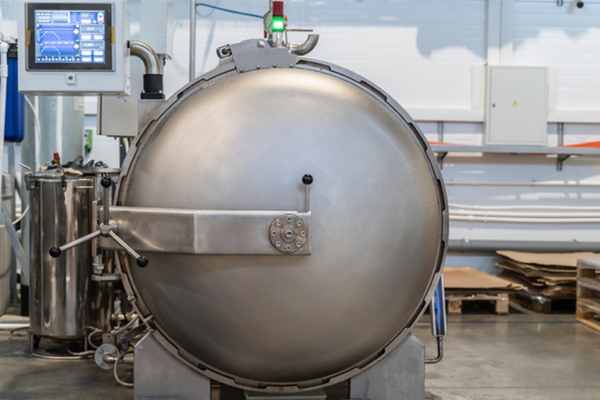
FQC Standard Periodic Inspection of Autoclaves
Autoclaves are vessels in which products are held at high temperature and pressure. They are used in laboratories and production lines, including laboratory sterilisation applications.
Some types are used to prevent contamination from one test sample affecting another, or to sterilise surgical instruments in operating theatres. In manufacturing, autoclaves process products at high temperature and pressure.
For example, applying tread to tyres requires high temperature and pressure, which can be provided by an autoclave.
Production autoclaves have a grille in the lower section through which waste is removed. Products must be secured to the autoclave with screws. Laboratory autoclaves have dedicated fixed chambers that avoid this requirement.
An autoclave cycle first removes the air by applying a vacuum, then increases pressure by introducing saturated steam into the vessel. A final vacuum completes the drying stage.
There are 3 types of autoclave: Type M, Type N and Type S.
Autoclaves undergo periodic inspection at least once a year. Vacuum and functional tests are performed in addition to hydrostatic testing.
Autoclaves must undergo periodic inspection at least once a year with reference to TS EN 285+A1 and TS EN 1300+A1.
Ironing Steam Boilers
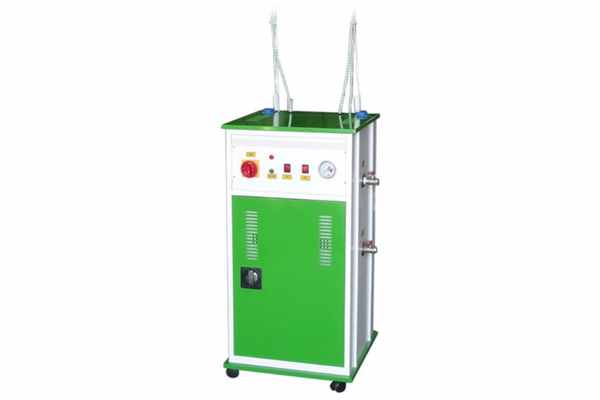
FQC Standard Periodic Inspection of Ironing Steam Boilers
An ironing steam boiler produces the steam required by irons, particularly in the textile industry.
The reference standards for ironing steam boilers are TS EN 134445-5 and TS EN 764-7. Electrically heated, low-capacity units may be installed in suitable areas within a workplace because of their limited water and steam capacity.
Ironing steam boilers must undergo periodic inspection at least once a year. Functional tests must be carried out in addition to hydrostatic testing.
Safety devices such as low-water protection, high-temperature and overpressure protection, and the temperature-control system must be tested.
Dyeing Vessels
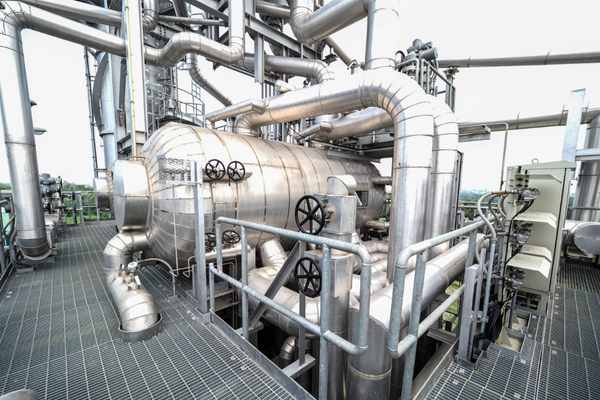
FQC Standard Periodic Inspection of Steam Generators
Dyeing vessels are used in the textile industry for fabrics, yarn packages and similar products. The fabric or yarn package is dyed using water at high temperature and pressure.
Periodic inspections of dyeing vessels are performed in accordance with TS EN 13445-5, TS EN ISO 11111-7 and TS EN 764-7.
A heat exchanger transfers heat from steam to water for use in the process. Periodic inspections include hydrostatic testing.
All functions must also be checked, including temperature and pressure limits, process stages and limiting systems. The safety-valve system is tested.
Quality Begins with Trust!
Get in touch with FQC Standard customer services and make a start so that your processes progress quickly and effectively!
Contact