
For Work Equipment Periodic Inspection Services
Periodic inspection is a critical occupational health and safety practice that checks work equipment at specified intervals for safety, conformity and performance.
Inspection Coverage
- Lifting and conveying equipment
- Pressure vessels and boilers
- Fire protection systems
- Electrical installations
- Racking, conveyor, construction machinery and pipeline inspections
Periodic Inspection
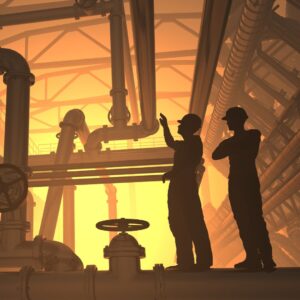
Periodic inspection means checking at defined intervals. Establishing a systematic inspection programme for work equipment is essential to occupational health and safety, helping protect both people and equipment from accidents. Routine maintenance or responding only when equipment fails is not sufficient. A suitably qualified specialist engineer or technician must inspect and test the safety devices.
Periodic inspections of work equipment may be carried out by persons authorised by the Ministry of Labour and Social Security through the İSG-KATİP system. An inspector's authorisation can be checked through İSG-KATİP via the e-Government portal.
Preventing work-equipment accidents starts with selecting the right equipment and production method for the task. This must be followed by regular maintenance, correct operating procedures and an uninterrupted programme of periodic inspection. Inspections must take account of the relevant methods, regulatory requirements, standards and manufacturer's instructions, use suitable measuring and testing instruments, and be performed by trained, competent persons.
Arranging the required periodic inspections is essential, but the quality of the resulting reports is equally important. The business must consider who performed the inspection, whether suitable instruments were used, whether they were calibrated, whether the calibration results were assessed, and whether the calibration ranges and limits were appropriate for the equipment inspected. Simply possessing an inspection report is not enough. Where the business cannot make this assessment itself, it should select an organisation recognised as competent by an accreditation body. This supports reliable, accurate inspection reporting.
Our organisation provides periodic inspection services both in Türkiye and internationally. Our organisational structure, extensive service network and technical infrastructure enable prompt, effective and thorough inspections. We closely follow developments in standards, legislation and technology to help our customers address potential risks.
Lifting and Conveying Equipment
This equipment moves loads horizontally, vertically or in both directions. Like other machinery, lifting and conveying equipment requires maintenance. Monitoring that maintenance helps ensure efficient and dependable operation.
The required safety components of lifting and conveying equipment are checked against the relevant standards. Dynamic and static tests also verify that the equipment can still carry loads safely, as intended when manufactured.
Pressure Vessels
Pressure vessels are pressurised storage systems. Drawing on the scope of the Simple Pressure Vessels Regulation, tanks operating above 0.5 bar are described as pressure vessels. Protection against corrosion is one of their most important maintenance requirements.
Pressure-vessel safety components are checked against the relevant standards. Pressure testing also verifies whether the vessel can still operate safely under pressure. No deformation or leakage should be present after the test.
Boilers
Boilers are pressurised systems that heat a fluid and supply it to a facility to meet its thermal energy requirements. They operate by transferring heat from a fuel-burning or electrical system to the fluid.
Boilers are classified by the fluid they use and further categorised by their fuel system. For example, a system using oil is called a thermal oil boiler, one producing steam is a steam boiler, and one using hot water is a hot-water boiler.
All safety components must be checked for correct operation. Pressure testing must also verify safe operation under pressure. There should be no pressure loss, leakage or deformation at the end of the test.
Fire Protection Systems
This category covers all of a facility's firefighting provisions, including fire detection and alarm systems, hose cabinets, hydrants, sprinklers, portable extinguishers, gaseous suppression systems, the fire pump station and water storage.
The readiness of the complete system must be verified by testing against the relevant regulations and standards. Tests must be repeated and reported every year.
Electrical Installations
The scope includes all electrical equipment installed at a facility. Annex III, Article 2.3, 'Installations', of the Work Equipment Regulation specifies how systems are to be inspected and who may perform the inspections.
Suitable test equipment must be used for earthing measurements and testing of electrical panels, residual current devices, lightning protection, cathodic protection, transformers and power factor correction systems.
A general electrical installation inspection must consider the entire electrical system. When requesting an inspection, all equipment and arrangements within that system should be taken into account.
Boiler Room and Heating Centre Layout Compliance
Areas containing combustion equipment are referred to as heating centres, while spaces housing boilers are called boiler rooms. These areas must be inspected immediately after the boilers and combustion systems are installed, before the firing system is operated. The inspection examines the physical characteristics of the space in relation to the equipment's thermal capacity and checks the suitability of the gas pipework.
Children's Playgrounds
Children's playgrounds are facilities installed in public or private areas for children to play. They must be inspected after installation and annually thereafter. Checks verify installation conditions and dimensions against the relevant standards. Annual inspections must also assess deterioration caused by weather, vandalism and similar influences.
Adventure Parks
Adventure parks generally offer courses for people seeking an adrenaline challenge, encouraging confidence, decision-making and physical action. Common activities include ropes courses, climbing walls, giant swings and zip lines.
Every facility must be inspected for safety when first installed and at regular intervals thereafter. Connections, ropes, steel structures and ground anchors must be checked.
Aircraft Ground Support Equipment
Aircraft ground support equipment includes passenger boarding bridges, de-icing vehicles, passenger stairs, baggage carts and similar airport equipment. It must be inspected by experienced specialists in the relevant field to help protect passengers and ground support teams.
Racking Systems
Racking systems are structures installed to increase storage capacity. Their inspection is based on reviewing structural calculations, comparing the calculations and installation reports with the installed system, and performing visual and dimensional checks.
Each rack must be marked with its load capacity and tested by loading it in accordance with that marking. Deflection after loading must be assessed against the permitted limits.
Escalators and Moving Walkways
Escalators are preferred in busy areas because they can provide greater passenger throughput than lifts. Moving walkways use a continuous belt or pallet surface. Although escalators and moving walkways differ in their form and some safety devices, their systems are otherwise similar.
Moving walkways are often preferred between car parks and building entrance levels, and where walking distances are long. At car-park exits, they provide access for people with pushchairs and wheelchair users to levels with more intensive lift service.
Conveyor Belt Systems
Conveyor systems transport products in industrial facilities, particularly where continuous feeding, a steady material flow or long-distance transport is required. Applications include mining, cement production and cargo-handling facilities. The complete belt system is checked against the relevant standard and the manufacturer's criteria.
Machine Tools
Machine tools shape materials in machining operations and are named according to their function. Lathes, milling machines, planers, CNC machines, saws and presses must be inspected against the relevant standards. Protective measures should be continually improved with operator safety as the priority. Regardless of the manufacturing date or original standard, safety equipment should be enhanced using current technology.
Construction Machinery
Construction equipment such as excavators, loaders, graders, rollers and drilling machines must be periodically checked against the applicable standards to verify safe operation. Inspections must be performed by experienced inspectors.
Pipelines
Pipelines transport fluids and are named according to their contents, such as compressed-air pipework, service-water pipework, fire mains and ammonia pipework.
Pipework inspection is based on hydrostatic testing. Where water testing is unsuitable for the material conveyed, non-destructive examination methods may be used. Continuous industrial production can make pipeline testing extremely difficult, so periodic inspections should be coordinated with planned shutdowns.
Quality Begins with Trust!
Get in touch with FQC Standard customer services and make a start so that your processes progress quickly and effectively!
Contact